
A Guide to early season Buzzer Fishing
🌱 The Conservation Angle
Early spring is a time of renewal. As water temperatures rise, chironomid pupae (buzzers) begin their mass hatches, becoming a vital food source for trout. Anglers who imitate these insects with carefully tied buzzer patterns are engaging in one of the most natural, least intrusive forms of fishing. Unlike lures that provoke aggression, buzzers mimic genuine food, encouraging trout to feed in their natural rhythm. This makes buzzer fishing a more ecological approach, aligning angling with the trout’s seasonal diet.
🎣 Technique and Respect
- Floating line & long leader setups are common, often with teams of two or three buzzers fished straight-line style. This method allows trout to intercept flies at the depth they’re naturally feeding, reducing unnecessary disturbance.
- Slow retrieves or even letting the flies drift naturally mirror the pupae’s ascent, keeping the presentation authentic.
- Using the Deadly popper (tying on channel) to hold up and present the buzzers at your chosen depth
- By fishing in this way, anglers avoid overworking the water and give trout the chance to feed calmly, which reduces stress on stocked and resident fish.
🐟 Stocking and Ecology
Reservoirs and lakes often see spring stockings of rainbow and brown trout, supplementing overwintered fish. Conservation-minded anglers recognize that these introductions can stir ecosystems. Fishing buzzers responsibly—avoiding overharvest and practicing catch-and-release—helps balance the needs of recreation with the health of aquatic communities. Using barbless hooks further minimizes harm.
🌍 Stewardship in Practice
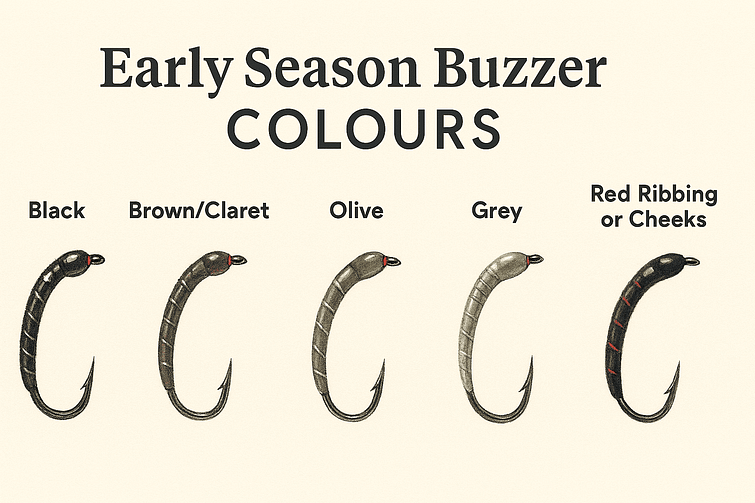
- Observe the hatch: Matching the size and colour of buzzers (black, brown, olive, claret) ensures trout aren’t pressured into unnatural feeding responses.
- Mind the margins: Early season trout often cruise close to banks where insect life is rich. Avoid trampling vegetation or disturbing spawning areas.
- Catch-and-release ethics: Handle fish with wet hands, keep them in the water as much as possible, and release them quickly to maintain survival rates.
✨ Why It Matters
Buzzer fishing in spring is more than a technical pursuit—it’s a chance to witness the delicate interplay between insect hatches, trout behaviour, and water health. By fishing in harmony with these cycles, anglers become guardians of the environment, ensuring that lakes and reservoirs remain vibrant ecosystems for future generations.
In short: early season buzzer fishing is a conservationist’s dream—gentle, imitative, and deeply respectful of trout and their habitat. It’s a reminder that the best angling practices are those that leave the water richer than we found it.
Early season buzzer tying’s in the following video..
These tying i use in various sizes and colours from the chart all year long
Materials supplied by Dusty`s Tackle
Fast delivery and quality supplier to the Fly tying community..
highly recommended.